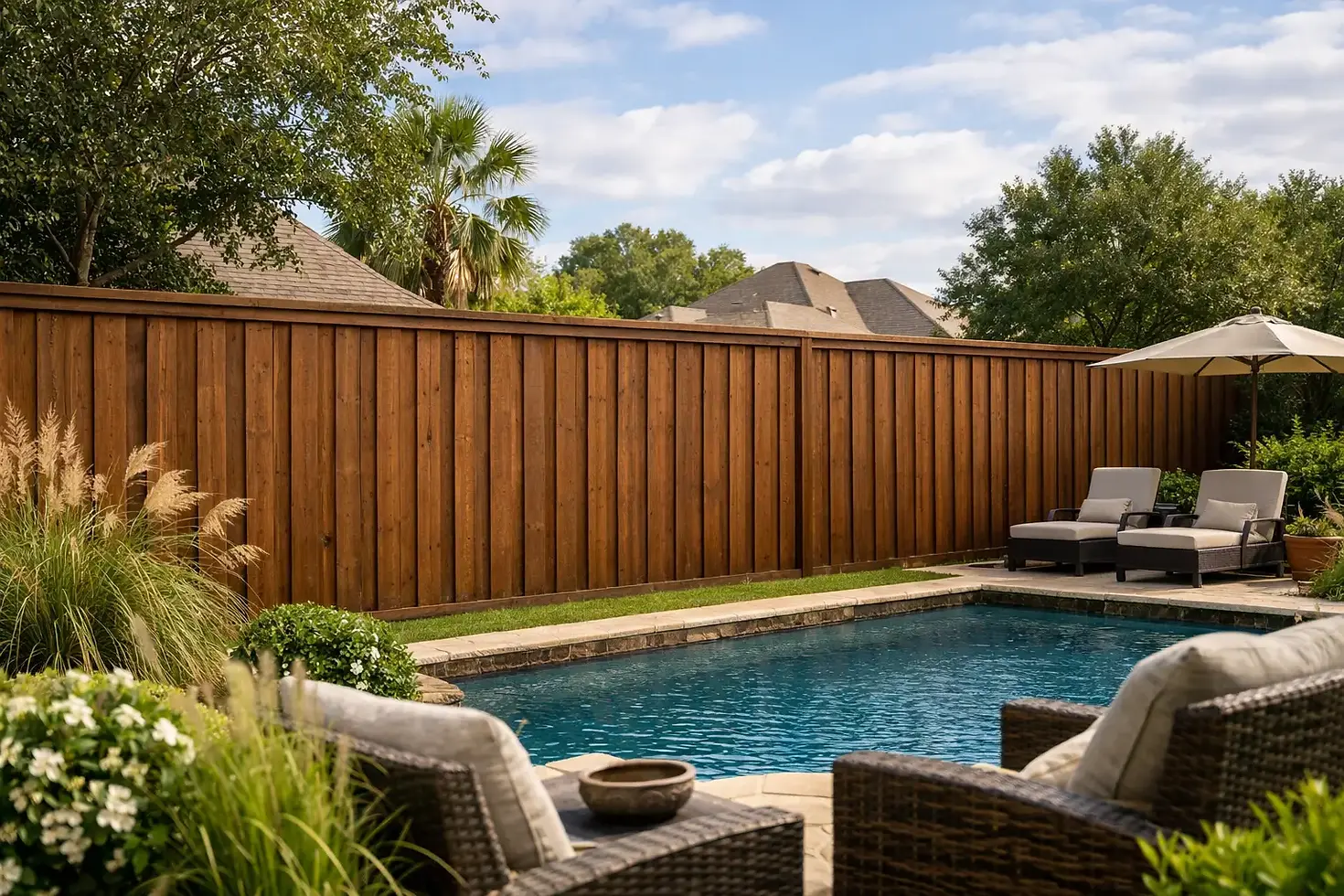
Best Fence Height for Backyard Privacy in Pearland
A fence that is too short leaves your patio, pool area, and back windows exposed. One that is too tall can create permit issues, upset an HOA, block airflow, or become more vulnerable in Houston-area storms. For most homeowners, the best fence height for backyard privacy is 6 feet, but the right answer depends on where the fence sits, what is behind your property, and the rules that apply to your neighborhood.
For Most Pearland Homes, 6 Feet Is the Practical Choice
A 6-foot wood privacy fence is the standard choice for many backyards in Pearland and surrounding Houston communities. It blocks the direct sightline from neighboring yards for most adults, gives children and pets a more enclosed space, and provides a clear boundary without making a typical residential lot feel boxed in.
It is also a practical height for a wood fence. Posts can be set deep enough to support it properly, panels are widely available, and repairs are straightforward when a board, picket, or section needs replacement. If privacy is the main goal, a properly built 6-foot fence usually gives homeowners the best balance of coverage, cost, appearance, and long-term durability.
That does not mean every yard needs the same fence. A home that backs up to a busy street, a two-story neighbor, or an open drainage area may need a different plan than a home with close single-story houses on both sides.
When an 8-Foot Fence May Make Sense
An 8-foot fence can provide a noticeable improvement in privacy where the yard faces a higher viewing point. This may include a neighboring second-story window, elevated deck, commercial property, apartment building, or road with passing traffic. The extra 2 feet can make a major difference around a pool, outdoor kitchen, or patio where families spend time outside.
However, taller is not automatically better. An 8-foot fence costs more because it uses longer posts, more material, and more labor. It also catches more wind. In Pearland, where heavy rain, high winds, and tropical weather are real concerns, a tall fence needs solid post spacing, proper depth, quality fasteners, and sound framing. A cheaply built tall fence can lean, rack, or fail sooner than a well-built 6-foot fence.
Before choosing 8 feet, check local requirements, your HOA rules, and any deed restrictions. Height limits can vary based on whether the fence is in the backyard, side yard, front yard, or along a corner lot. A contractor should not guess at these restrictions, and neither should a homeowner. Confirm the rules before material is ordered or holes are dug.
Consider a Privacy Screen Instead of Building Higher
If the only problem is one sightline, raising the entire fence may be unnecessary. A strategically placed privacy screen, lattice-top section, pergola, or planted hedge can block the view where it matters most while keeping the main fence at a manageable height.
For example, if a neighbor's upstairs window overlooks one corner of your patio, a screen near that seating area may solve the problem without the cost and permitting concerns of an 8-foot perimeter fence. This approach can also preserve airflow, which matters during hot Pearland summers.
Fence Height Depends on What You Are Trying to Block
Privacy is not always about a neighbor looking over the fence. Some homeowners want to reduce street visibility. Others want to keep a dog contained, create a safer play area, or hide an aging shed, pool equipment, or utility area. The fence height should match the actual problem.
A 4-foot fence may be enough for defining a property line or containing some dogs, but it rarely creates real backyard privacy. A 5-foot fence offers more separation, yet many adults can still see over it, especially on uneven lots. For most residential privacy needs, 6 feet is where the fence starts doing the job homeowners expect.
If your yard slopes, be careful with measurements. A 6-foot fence measured from your side may look much shorter from a neighbor's higher yard. Stepped panels or a custom layout can follow the grade and keep the finished fence looking clean. This is one reason an on-site assessment matters more than choosing a height based on a photo or a neighbor's fence.
Check Property Lines, Easements, and Neighborhood Rules First
A privacy fence only adds value if it is built in the right place. Before installation, confirm the property line rather than assuming the existing fence, a row of trees, or a landscaping bed marks the boundary. If there is uncertainty, a survey is the safest way to avoid an expensive dispute later.
You should also look for utility easements. An easement may limit where a permanent fence can be placed, or it may allow utility crews access even after the fence is built. Gates can sometimes help with access, but the correct solution depends on the easement and local requirements.
HOA rules are another common issue in planned communities. They may regulate fence height, materials, stain color, picket style, and which direction the finished side must face. Some associations require approval before construction begins. Getting that approval ahead of time protects you from having to alter or remove a new fence.
Corner lots deserve extra attention because fencing near streets and intersections may have separate visibility restrictions. The same is true for fences around pools, which can be subject to safety requirements beyond normal backyard privacy rules. A privacy fence can be part of a pool barrier, but it must meet the applicable safety standards for gates, latches, openings, and height.
Wood Fence Design Matters as Much as Height
A 6-foot fence with gaps between pickets will not provide the same privacy as a 6-foot board-on-board or solid-panel design. If privacy is the goal, choose a style built to limit sightlines. Board-on-board fences are especially useful because overlapping pickets help cover small gaps that can develop as wood naturally dries and moves.
For homeowners who want a cleaner, more traditional look, a solid privacy fence with a cap and trim can provide full coverage and a finished appearance. The best style depends on the home's exterior, the neighborhood, and the amount of maintenance you are willing to handle.
Wood fencing needs regular care in the Gulf Coast climate. Moisture, sun, insects, and shifting soil can all take a toll. Using quality materials, setting posts correctly, keeping sprinkler heads from soaking the fence, and applying a suitable stain or sealant can help extend its service life.
Do Not Build Against Trees or Overgrown Roots
Trees can complicate fence placement. Large roots may interfere with post holes, and trunks that are too close to the fence can rub against boards, trap moisture, and create ongoing maintenance problems. Overhanging limbs can drop branches onto the fence during storms.
If a tree is hazardous, diseased, or positioned directly in the planned fence line, address it before installation. Mendez Tree Services Pearland can help homeowners clear unsafe trees, grind old stumps, and prepare a fence line so the new structure has a clean, workable path. Removing a stump after a fence is installed is usually more difficult and can damage the new work.
Plan for Gates, Wind, and Everyday Use
A fence is only useful if you can comfortably use the yard after it is built. Think about where you need gates for lawn equipment, trash bins, pool access, or future projects. A wide double gate may be worthwhile if you may need to bring in a trailer, equipment, or materials later.
In storm-prone areas, gate construction matters. Gates are often the first part of a fence to sag because they carry moving weight. Strong posts, good hinges, a proper latch, and correct bracing help keep them working properly. If the property is exposed to open land or a roadway, wind load should be part of the fence plan from the start.
Also consider drainage. A solid fence should not create a situation where water gets trapped against the house or redirects runoff toward a neighbor's property. Pearland rain can expose poor site planning quickly. A professional installer can account for grade changes, drainage paths, and low spots while laying out the fence.
Choose Privacy Without Creating a New Problem
The best fence height is the one that gives your family the privacy you want while fitting your lot, local rules, and budget. For many homeowners, that means a well-built 6-foot wood privacy fence. Where views from above or nearby traffic are a concern, 8 feet or a targeted screen may be worth considering after the proper checks are made.
A good fence should make your backyard feel more comfortable the day it is installed and remain dependable through heat, rain, and storms. Start with the real privacy issue, verify the rules, and build a solution that fits the property instead of simply choosing the tallest option available.


Comments