Hazardous Tree Signs Homeowners Should Spot
That big tree in the yard may look fine from the street, but hazardous tree signs often show up in ways homeowners miss at first. A limb starts dropping more often. The trunk develops a crack. The tree suddenly leans after a storm. In Pearland and the greater Houston area, heavy rain, wind, heat, and shifting soil can turn a stressed tree into a real safety problem fast.
If a tree is close to your house, driveway, fence, power lines, or a neighbor’s property, waiting too long can get expensive. The goal is not to panic every time a branch falls. The goal is to know the difference between a tree that needs normal trimming and one that may need urgent attention.
Common hazardous tree signs to watch for
Some warning signs are easy to see from the ground. Others are subtle but still serious. A tree does not have to be completely dead to be dangerous. In many cases, a partially damaged or declining tree is the one most likely to fail.
Dead or hanging limbs are one of the clearest red flags. Large branches with no leaves during the growing season, brittle wood, or limbs already cracked and suspended in the canopy can fall without much warning. This is especially true after high winds or saturated soil.
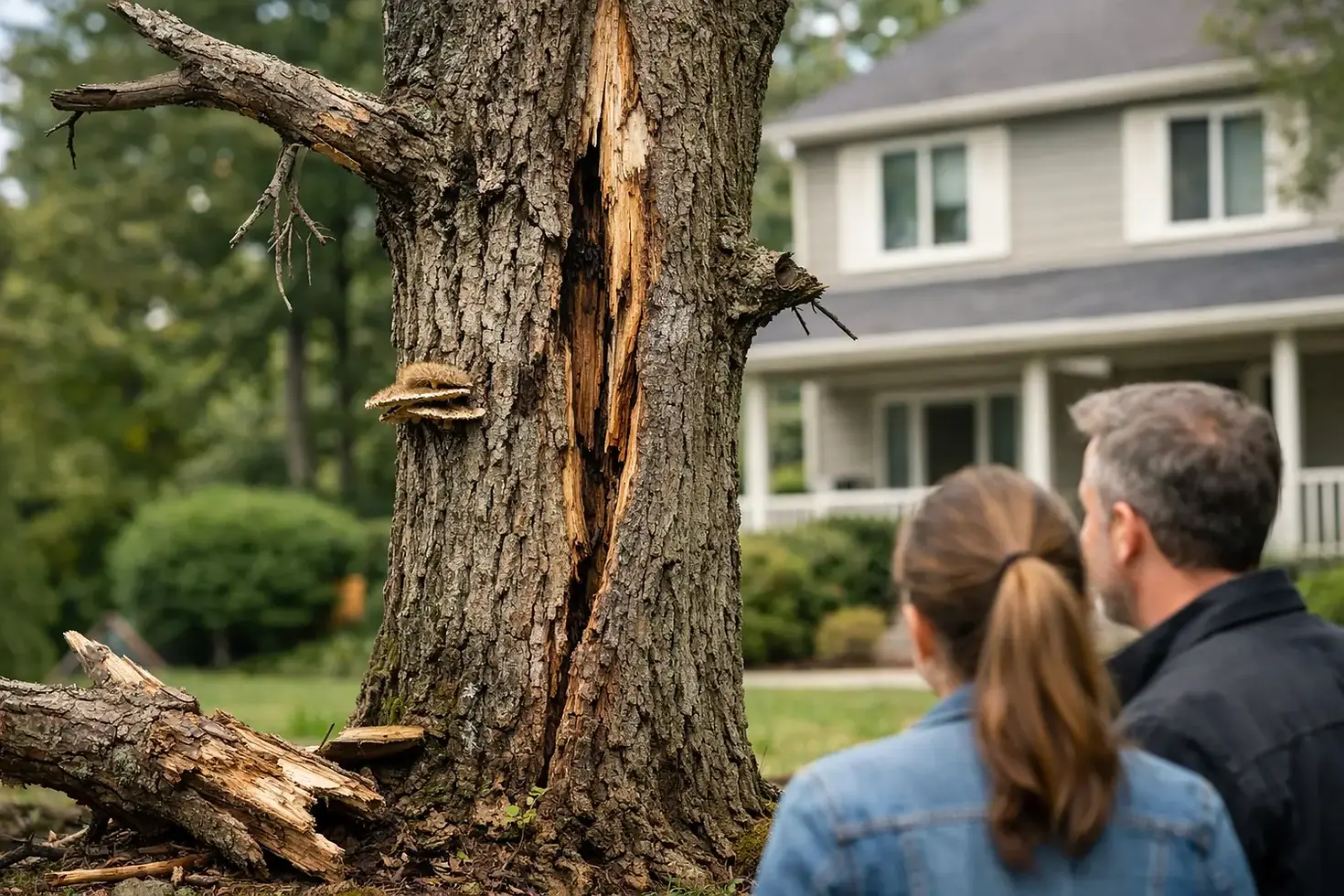
A trunk that is splitting, cracking, or showing a deep vertical seam is another major concern. Surface damage does not always mean the whole tree is failing, but a visible crack can point to structural weakness inside the trunk. If that crack is growing, or if it lines up with heavy limbs above it, the risk goes up.
Leaning is another issue homeowners should take seriously. Not every leaning tree is hazardous. Some trees naturally grow at an angle and remain stable for years. What matters is change. If a tree that used to stand straight now leans, or if the soil is lifting around the base, that can mean the root system is failing.
Mushrooms or fungal growth near the trunk or root flare can also be a sign of internal decay. The same goes for hollow spots, soft wood, or cavities in the trunk. A tree can still be alive and leafy while being structurally unsound inside. That is what makes decay so risky - it often hides until the tree is under stress.
What dying trees usually look like
A declining tree often gives more than one warning at the same time. You might notice thinning leaves, bare sections in the canopy, peeling bark, or branches that die back from the tips. These signs do not always mean immediate failure, but they do mean the tree is under stress and should not be ignored.
In Texas yards, drought stress and root problems are common. If a tree is dropping leaves out of season, producing smaller leaves than usual, or showing sparse growth compared to previous years, that can point to a bigger health issue. Insects and disease may also move in once a tree becomes weak.
The hard part is that a dying tree does not always fall right away. Some stand for years in poor condition. Others come down in the next strong storm. That is why condition and location matter together. A weak tree in the back corner of a large lot may be less urgent than a weak tree hanging over a roof, parked car, or play area.
Hazardous tree signs after a storm
Storms tend to expose problems that were already there. A tree with hidden decay, weak branch unions, or shallow roots may hold up in normal weather but fail when wind and rain hit together.
After a storm, look for fresh cracks in the trunk, broken branch stubs, branches caught in the canopy, exposed roots, or sudden leaning. Also check the ground around the base. Soil heaving, root plate movement, or newly visible roots can mean the tree has started to pull loose.
One common mistake is assuming a tree is safe because it is still standing the next morning. Some damaged trees stay upright temporarily, then fail days later once the soil dries, the wind shifts, or the tree’s weight settles unevenly. If a tree took a hard hit and is close to structures, it is worth having it checked.
Problems at the roots are often the real issue
Homeowners usually focus on the trunk and canopy because those are easier to see. But root damage is often what makes a tree truly unstable.
Construction, trenching, grade changes, poor drainage, and repeated soil compaction can all weaken roots over time. In some yards, roots begin to rot because water sits too long around the base. In others, roots get cut during home improvement work, and the tree starts declining months later.
A tree may still have green leaves while the anchoring roots are compromised. That is why signs like leaning, cracked soil, exposed roots, and movement at the base matter so much. When root failure starts, the whole tree can come down with little warning.
When trimming helps and when removal makes more sense
Not every problem tree needs to be removed. In some cases, strategic trimming can reduce weight, clear deadwood, and improve safety. If the issue is limited to a few overextended limbs or storm-damaged branches, pruning may solve the immediate hazard.
But trimming has limits. If the trunk is cracked, the tree is heavily decayed, the root system is unstable, or a large portion of the canopy is already dead, removal is often the safer choice. Homeowners sometimes want to save a tree at all costs, which is understandable. Still, keeping a severely compromised tree near a home can create a much bigger problem later.
This is one of those areas where it depends on the tree species, the extent of damage, and what the tree could hit if it fails. A healthy mature tree adds shade and value to a yard. A structurally unsound tree does the opposite.
Trees near fences, roofs, and driveways need faster action
The same defect is more serious in one location than another. A dead limb over an empty section of yard is not ideal, but it is different from a dead limb hanging over a roof or wood fence. A leaning tree near a driveway where your family parks every day carries more urgency than one near the edge of a property line.
That is why homeowners should think beyond the tree itself. Ask what is in the fall zone. Could it hit your house, garage, fence, neighbor’s property, or utility service line? Could kids or pets be under it regularly? The answer helps determine how quickly you should act.
For local homeowners, this matters because outdoor structures are part of the investment too. A failing tree can damage roofing, crush fencing, block access, and tear up lawn space that would cost even more to repair afterward.
What not to do if you notice hazardous tree signs
If a tree shows clear structural problems, avoid trying to fix it with a ladder and chainsaw. That is where many injuries happen. Large limbs can shift unexpectedly, cracked trunks can split under pressure, and partially uprooted trees are especially dangerous to work around.
It is also a mistake to ignore a tree because it still has leaves. Green does not always mean safe. Structural failure and tree health are related, but they are not the same thing.
Another bad call is waiting until the next storm to see what happens. By that point, your choices are often fewer and the cleanup is more expensive. It is usually cheaper and safer to handle a hazard before it becomes an emergency.
When to call for professional help
If you see multiple hazardous tree signs at once, it is time to have the tree evaluated. The same goes for any tree that has shifted after a storm, has large dead limbs over structures, or shows visible trunk damage near the base.
A professional crew can assess whether the tree needs trimming, full removal, or monitoring. They can also spot risks homeowners tend to miss, especially in the upper canopy or root zone. For Pearland-area property owners, Mendez Tree Services Pearland handles tree issues with a practical focus on safety, cleanup, and protecting the rest of the property during the work.
A problem tree rarely gets better by being ignored. If something looks off, trust that instinct and get it checked. Acting early can protect your home, your yard, and everyone who uses the space.


Comments